
…And, by the way, what even IS an energy efficient window? And what about triple pane or triple-glazed windows? Should I consider them instead of the standard double-glazed windows?
These are some of the questions I’m hoping you’ll get a clear answer for in this post. Take a quick listen to the video here, and read on for more details.
1. What is a Energy Efficient Window?
Energy efficient windows are designed to reduce heat transfer between your home and the outdoors, helping maintain comfortable indoor temperatures year-round.
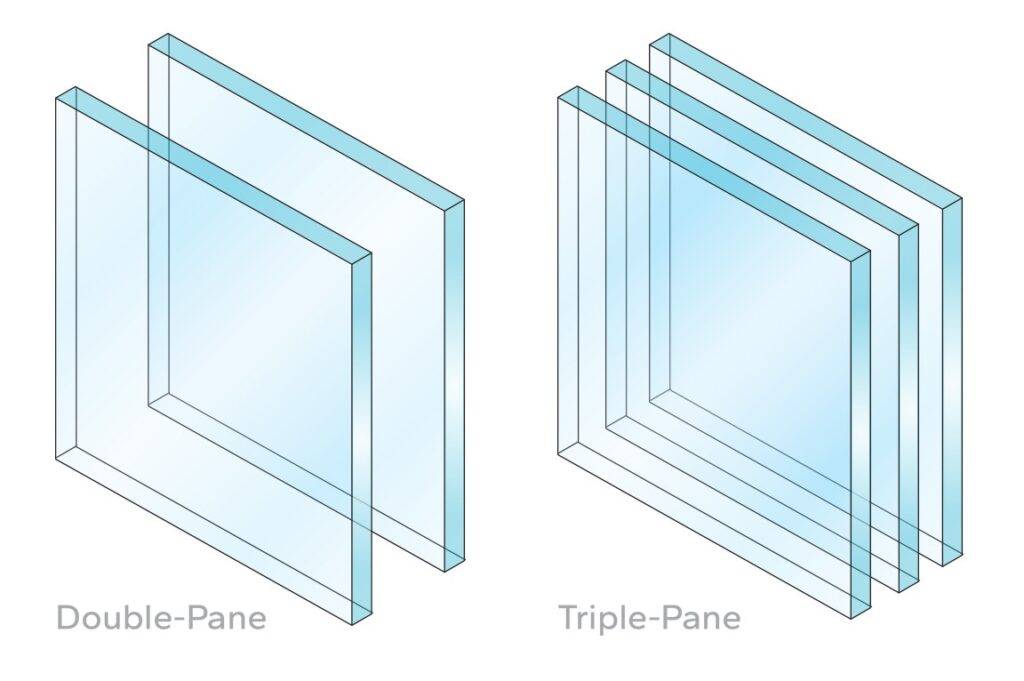
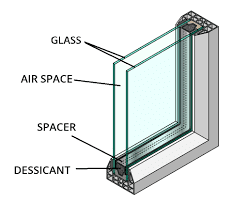
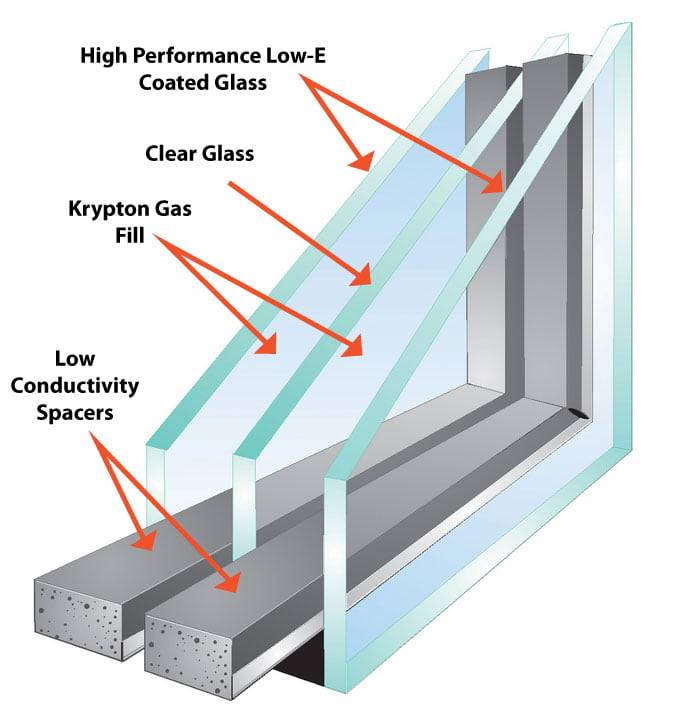
Instead of a single pane of glass, these types of windows are built with two or three panes, separated by a space that acts as insulation. This space is often filled with argon gas — a non-toxic gas which is denser than air, making it better at preventing heat loss or gain.
And just in case you’re wondering, panes of glass in a window or door are commonly refered to as “glazing“. So a window or door with 2 panes of glass is “double glazed” and one with 3 panes of glass is “triple glazed”.
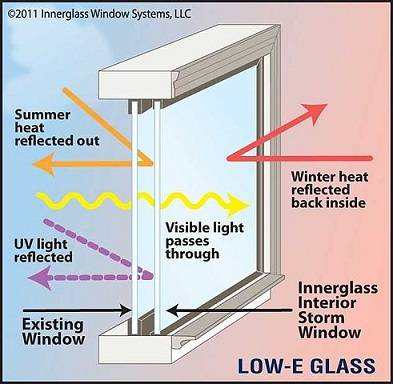
Another common feature is low-emissivity ( or Low-E) glass. This is a coating that’s applied to the glass which blocks a lot of the heat-transferring UV and infrared sun rays. This helps keep heat inside during the winter and outside during the summer, without reducing natural light.
Most of the windows Joyland Windows and Doors sell are energy efficient. The windows are also rated by the NFRC (National Fenestration Rating Council). The NFRC is a third-party, non-profit organization that administers the only uniform, independent rating and labeling system for the energy performance of windows, doors, skylights, and attachment products. They use the following four specific points to measure a window’s energy efficiency:
- U-Factor – The lower the U-Factor, the better the window’s overall thermal performance. The glass package, the window’s material, and its components all affect this rating.
- Solar Heat Gain Coefficient – A measurement of how well a window product blocks heat caused by sunlight. The rating is a number between 0 and 1. The lower the number, the better (meaning there is less solar heat transmitted through the window).
- Visible Transmittance – A measurement of how much light comes through the window. Expressed as a number between 0 and 1, the higher the number, the better on this one.
- Condensation Resistance – A measurement of how well the window resists condensation on the glass. Again, the higher the number, the better.
2. Double-Pane vs. Triple-Pane Windows
Double-Pane Windows
- Affordable compared to triple-pane
- Excellent insulation over single-pane
- Strong noise reduction
- Best value for most homes
Triple-Pane Windows
- Better thermal insulation than double-pane
- Significantly better noise reduction
- Costs 1.5 to 3 times more than double-pane
- Energy savings may not justify the extra cost
3. Are Energy Efficient Windows Worth It?
Whether upgrading your windows is worth it depends on your current windows and on what you’re hoping to accomplish:
- Better energy efficiency
- Existing double-pane windows: Moving to triple-pane windows rarely produces enough additional energy savings to offset the higher cost. If you have good double-pane windows already, I’d recommend sticking with them in this case.
- Old single-pane wooden windows: Replacing these with double-pane windows will deliver a dramatic improvement in efficiency and comfort. You could save over $100 per year per window in energy costs.
- Better Noise Cancelling quality
- Say you live along a busy street or near the highway. Triple-glazed windows will definitely keep that trafic noise outside better than double-glazed windows.
Vinyl replacement windows typically last 25+ years, so the investment can pay off in long-term comfort and reduced utility bills.
Keep in mind that in many homes, the largest energy loss comes from the attic, not the windows. Heat escapes upward in winter and enters from above in summer, making attic insulation a top priority for efficiency improvements. So if energy efficiency is your primary objective for looking at window replacements, don’t forget to scrutinize air leakage issues from your living space into the attic, and vice-versa.
Additional Considerations when replacing windows
- Tax incentives: Energy Star–rated windows may qualify for federal or state tax credits.
- Noise reduction: Double and triple-pane designs greatly reduce outdoor noise.
- Improved comfort: Fewer drafts, more stable indoor temperatures, and better year-round climate control.
- What about siding? Windows should be replaced before siding. So if you’re wanting to get your siding replaced, but also do the windows sometime, consider doing the windows first. This will eliminate the risk of needing to cut or re-flash the new siding to fit around the windows properly.

Bottom Line
Switching from single-pane to energy-efficient double-pane windows offers significant benefits in energy savings, noise reduction, and comfort. For homeowners with existing double-pane windows, triple-pane may be worth it only if noise reduction is a priority — not strictly for efficiency gains.
Looking to have energy efficient windows installed on your home? Give us a ring or click the button below and we can help you get the windows you are looking for.