
Why a Brand-New Window Had to Be Reinstalled in Mount Joy, PA

The kitchen window was brand new. That should have been the end of the story.

But a Mount Joy homeowner had recently purchased the house and was remodeling it before moving in. Some of the work left behind by the previous owner was more than she wanted to tackle herself, including a new kitchen window that had not been built into the wall correctly.

The window unit was undamaged. The installation around it was not. So we did something that can sound backward at first: we removed the new window, rebuilt the opening, and reinstalled the same window correctly. It was the practical, cost-conscious fix for this home.

The Window Itself Was Not the Problem

A window can be perfectly usable and still perform poorly if the opening around it is framed, insulated, flashed, or finished incorrectly. That distinction mattered here. Replacing the glass or buying another window would not have addressed the actual problem behind the trim and siding.

The existing unit was new and undamaged, so our plan was to remove it carefully, correct the wall opening, and put that same window back. For the homeowner, that meant keeping a perfectly usable product already in the home instead of replacing it simply because the original installation had gone wrong.

What We Found Behind the Trim and Siding

Once Javan removed the exterior trim, siding, interior jambs, and sill, the problem became much clearer. He found uneven framing, no visible insulation around the window, and what he described as “just a skimpy little bead of caulk.” The caulking at the top also looked unreliable, and the exterior had been left without a properly rebuilt J-channel and siding around the opening.
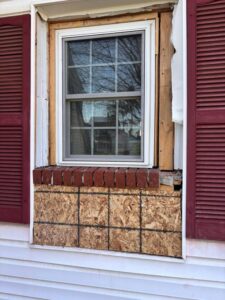
A poorly installed window and frame.
The window frame before we did work to it.

After more than 200 projects, Javan called it “one of the worst-framed windows I’ve ever run into.” That reaction makes for a good video moment, but the homeowner issue underneath it was simple and relatable: the project looked finished from a distance, yet the parts that help the window fit and manage weather had not been completed correctly.

Window openings interrupt the wall’s drainage plane, which is why the flashing and moisture barrier around an opening have to work with the rest of the wall. Building America guidance on fully flashed windows and doors explains that these layers help direct water down and out instead of letting it reach the framing.
Why Reinstalling the Same Window Made Sense

Not every window problem requires a new window. In this case, the unit itself was not cracked, fogged, warped, or damaged. It could be removed without destroying it, and it could be reset in a properly rebuilt opening.

That made reinstallation the more sensible option. A replacement would have added cost while leaving the real repair in exactly the same place: the wall opening, weather barrier, exterior trim, and siding still needed to be rebuilt. The goal was not to sell the biggest possible project. It was to fix what was actually wrong.

How We Rebuilt the Kitchen Window Opening

This was more involved than running a fresh bead of caulk around the edge. The crew had to open the area enough to see the full condition of the wall and rebuild the system around the window.

  • Remove and protect the existing window: The crew carefully removed the existing window so it could be reused once the opening was corrected.
  • Expose the full opening: We removed the surrounding siding and trim to expose the sheathing, house wrap, and framing, rather than guessing from the surface.
  • Rebuild the rough opening: The framing was reconstructed to make the opening plumb, level, and structurally sound. The sill and surrounding gaps were adjusted so the exterior finish could meet the window cleanly.
  • Restore the weather-management layers: House wrap and flashing tape were installed around the opening to reconnect it to the wall’s moisture barrier.
  • Reinstall the same window: The undamaged unit was set back into the corrected opening, then shimmed and leveled so it could operate and sit as intended.
  • Finish and seal the exterior: The crew custom-bent white aluminum capping, installed new J-channel and matching white Dutch lap siding, and sealed the joints and transitions. No exterior wood was left exposed.

The finished result looked clean, but appearance was only part of the job. Behind that fresh exterior was a rebuilt opening and a window that was finally supported, aligned, covered, and sealed as a complete system.

A Separate Basement Window Needed a Different Answer

The same project also included a basement hopper window, but it was a separate issue. That glass was cracked and broken, so the right solution there was a full replacement with a new white hopper window using Low-E, argon-filled glass.

The two windows are a useful comparison. The kitchen unit was good and the installation was bad, so we rebuilt and reinstalled it. The basement unit was damaged, so we replaced it. A good assessment should tell you which problem you actually have before anyone recommends a solution.

The Result: A New Window That Finally Felt New

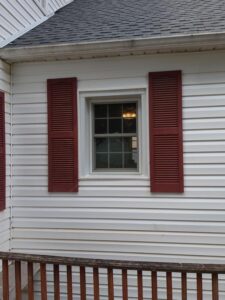
A freshly redone window and window frame in Mount Joy, Pennsylvania that was done by Joyland Roofing.
The window after our installers worked on it.

By the end of the project, the kitchen window was back in place with corrected framing, new weather-management layers, custom metal trim, matching siding, and sealed exterior transitions. The unexpected conditions made the work more interesting, but they did not change the goal: leave the homeowner with a window opening that was rebuilt properly, without throwing away a perfectly usable window.

If you are remodeling a home and something about a newer window feels off, do not assume the only choices are to live with it or replace the entire unit. Sometimes the best answer is to investigate the installation around it.

What Mount Joy Homeowners Can Learn From This Project

  • “Brand new” describes the window, not necessarily the quality of the installation.
  • Drafts or signs of moisture can come from gaps and exterior details around the unit, not only from failed glass or a worn-out frame.
  • Caulk is a finishing layer, not a substitute for correct framing, insulation, flashing, and siding details.
  • A contractor should be able to explain whether the problem is the window, the opening, or both.
  • Reusing a sound window can be the most practical choice when the surrounding installation is what failed.

Joyland handles window and door repairs, replacements, and more involved opening corrections. Homeowners can also explore our window and door services in Mount Joy or review our window services pricing guide before scheduling an assessment.

Not Sure Whether the Window or the Installation Is the Problem?

You do not have to diagnose it from the trim. Joyland Windows & Doors can inspect the window, the opening, and the surrounding exterior, then explain whether a repair, reinstallation, or replacement makes the most sense for your home. Request a no-pressure estimate and we will help you start with the real problem.

Frequently Asked Questions

Can an improperly installed window be removed and reinstalled?

Often, yes. If the unit is undamaged, appropriate for the opening, and can be removed safely, a contractor may be able to correct the rough opening and reinstall the same window. The condition of the frame, glass, hardware, and surrounding wall should be inspected first.

Not automatically. A draft can come from the window unit, but it can also come from gaps, missing insulation, poor alignment, failed sealant, or problems around the rough opening. An assessment should identify the source before replacement is recommended.

The rough opening is the framed opening in the wall where the window is installed. It needs to be properly sized, plumb, level, and structurally sound so the window can be shimmed, fastened, insulated, flashed, and finished correctly.

They help connect the window opening to the wall’s overall water-management system. When installed in the correct sequence, those layers help direct water away from the opening and protect the surrounding framing.

Start with the actual failure. A repair may solve a hardware, screen, or glass issue. Reinstallation may make sense when the unit is sound but the opening or exterior details are wrong. Replacement is more likely when the unit itself is damaged, failed, or no longer suitable for the home.