If you’ve spent more than five minutes looking at windows, you’ve probably seen the name Andersen. They are the “big dogs” of the window world. But you’ve also probably seen the price tag and wondered if those windows are made of solid gold.
Spoiler: They aren’t. But they are made of some pretty cool science.
As a window installer, I get asked the same question a good bit: “Are Andersen windows actually worth the extra money, or am I just paying for a fancy logo?”. Today, I’ll try to help settle that question for you. We’ll look at the math, the materials, and even some ways to get Andersen quality without the “mansion” price tag.
Table of Contents
- The “Andersen Price Gap”: Why Is It So Expensive?
- The Science of “The Squeeze” (CTE)
- The Two Faces of Andersen: Renewal and Local Contractors
- Andersen vs. ProVia: The Battle of the Best
- Patio Doors: Don’t Let Your Door Stick
- Why Old Andersen Windows Live Forever
- The Final Verdict: Is It Worth It for YOU?
The “Andersen Price Gap”: Why Is It So Expensive?
Let’s be real—the price difference between a basic vinyl window and an Andersen window isn’t just a few bucks. Most windows you see today are made of PVC (vinyl) because it’s cheap and easy to make.
Andersen did something different. They invented a material called Fibrex. It’s a mix of wood fibers and special plastics designed to be as strong as wood but as easy to take care of as vinyl. And they developed this product with good reason. Read on…
The Science of “The Squeeze” (CTE)
Andersen is concerned with longevity in their products. Specifically, they look at the science behind what makes a window or door last longest. One of the big players in this question is the scientific term Coefficient of Thermal Expansion (CTE). It’s a fancy way of saying “how much does this window grow and shrink when it gets hot or cold?”.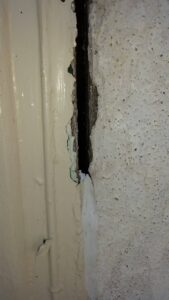
In places like Mechanicsburg or West Chester, where we have freezing winters and hot, humid summers, this science actually matters.
-
- Vinyl window: Expands and contracts a lot due to heat and cold. This can cause the sash/frame to separate from the glass, which in turn breaks the thermal seal. You’re left with drafty windows or foggy glass.
- Fibrex: Behaves more like the wood and brick your house is built from. It expands and contracts much less than vinyl, increasing the long-term performance and durability of the window or door.
- Wood: Stable, enduring. But it’s also higher maintenance, especially on the outside. Which is why Andersen has the option of a wood window with an exterior vinyl cladding so that you have that same maintenance-free window but with the quality of a wooden frame sash.
| Material Property | Fibrex Composite | Standard High-Quality Vinyl |
| CTE (Stability) | 1.6 (Very Stable) | 3.4 to 4.0 (Moves a lot) |
| Strength | 2x Higher than Vinyl | Industry Standard |
If your window is on the south side of your house in the blazing sun, vinyl can actually start to sag due to heat exposure. This, of course, leads to problems like failed hardware, window doesn’t open/close, and drafts/inefficiency. This is where the Fibrex or wood materials make a big difference. They’re about 2 times stronger than vinyl, so they can withstand the heat and weather better.
The Two Faces of Andersen: Renewal By Andersen vs. Independent Contractors
This is where most homeowners get confused. You might get a quote for $5,000 for one window, and your neighbor gets a quote for $2,000 for an Andersen window. Why?
1. Renewal by Andersen
Renewal by Andersen is a “one-stop shop”. They handle the design, the manufacturing, and the installation.
- The Pro: It’s a pretty safe choice most times, because this is an Andersen franchise. They may have access to some products that are not available to other contractors.
- The Con: It is expensive. In 2026, you might pay $3,000 to $5,500 per window because you’re paying for their massive marketing and franchise fees.
2. Local Contractors
Local, independent contractors have access to the same high-quality Andersen lines (like the 100, 400, or A-Series) but without the extra franchise fees and marketing budgets which affect Renewal’s pricing.
- The Price: An independent contractor can often install an Andersen wood window for $1,600 to $2,800.
- The Flexibility: Local contractors are also not tied to the Andersen brand. So if you want to mix and match – say put Andersen in the living room but high-quality vinyl in the basement – a local contractor will probably be able to do that.
Andersen vs. ProVia: The Battle of the Best
If you aren’t going to buy Andersen, you should probably look at ProVia. They have high quality standards when it comes to vinyl windows, and are known for great warranty support and consistency.
ProVia Endure Series
ProVia’s Endure line is a beast. It’s filled with special insulation (Neopor) and can actually beat Andersen in keeping heat from escaping. If you just want a window that works and you never have to think about it again, ProVia Endure is a top-tier choice.
Andersen 400 Series
The Andersen 400 Series is the industry standard for a reason. It has a solid wood core with a protective vinyl cladding or “skin” on the outside that doesn’t peel or flake.
- The Vibe: On the inside, it’s real wood. You can stain it to match your 100-year-old trim.
- The Feel: When you close an Andersen window, it feels solid. Vinyl can sometimes feel like… well, plastic.
| Feature | ProVia Endure (Vinyl) | Andersen 400 (Clad Wood) |
| Interior Look | Wood-look laminate | Genuine Wood (Pine, Oak, Maple) |
| Durability | 20–30 Years | 45+ Years |
| Warranty | Lifetime Limited | 20-Year Glass / 10-Year Hardware |
Patio Doors: Don’t Let Your Door Stick
Windows just sit there. Patio doors are machines. They are heavy, they slide, and they get used every single day.
A big 8-foot sliding door has glass that weighs over 150 pounds. If the frame is just vinyl, it has to be stuffed with steel so it doesn’t bend under that weight. Over time, vinyl doors can get “sticky” or hard to slide.
Because Andersen uses wood cores and Fibrex, their doors are naturally stiffer than vinyl doors. If you want the “Wow Factor”—like those massive folding or pivot doors that make your whole wall disappear—Andersen is one of the only brands that can actually pull it off reliably.
| Feature | Andersen Frenchwood | ProVia Endure Slider |
| Material | Clad Wood or Fibrex | Reinforced Vinyl |
| “Big Door” Options | Folding, Pivot, Multi-Glide | Mostly Standard Sliders |
| 2026 Price | $8,000 – $12,000 | $5,000 – $8,500 |
Why Old Andersen Windows Live Forever
Imagine your car breaks down, but the company that made it doesn’t stock parts anymore. You’re stuck, right?
Andersen is different. They have a legendary commitment to legacy support.
- Findable Parts: If you have an Andersen window from 1985, you can still go online and buy the exact handle or weatherstripping for it today.
- Sash Replacement: If your glass breaks, you can often just replace the “sash” (the part with the glass) instead of ripping the whole window out of your wall. This saves you a mountain of money.
The Final Verdict: Is It Worth It for YOU?
Andersen windows aren’t for everybody, or every application. And neither are vinyl windows.
Buy Andersen If:
- You’re staying put: If you plan to live in your home for 20+ years, the cost “evens out” because you won’t have to replace them again.
- You live in an upscale neighborhood: In places like the Main Line or Upper St. Clair, buyers expect Andersen. It actually helps sell your house faster, for more money.
- You love the look of wood: Nothing beats real wood for a luxury or historic home.
Skip Andersen If:
- You’re “Flipping” the house: If you’re moving in 5 years, you won’t get your money back in energy savings. They’ll help resale value some, but probably not enough to make sense. Mid-grade vinyl will look “fresh” enough for the next buyer.
- You’re on a super tight budget: A poorly installed Andersen window is worse than a perfectly installed cheap one. If the price of the window means you have to hire a “shady” installer, don’t do it.
The ROI (Return on Investment) in Pennsylvania
| Metric | Vinyl Windows | Wood/Composite (Andersen) |
| Resale ROI | 55% – 76% | 57% – 70% |
| Energy Savings | 10% – 15% | 12% – 18% |
| Avg. Cost (PA) | ~$1,028 per window | $1,800+ per window |
While vinyl gives you a slightly better percentage back, Andersen adds a higher actual dollar amount to your home’s value.
Wrap Up
So, are they worth it? Yes—if you treat your home like a long-term asset.
If you want the best results, here is my tip: Skip the high-pressure sales pitch from the national franchises. Find a local, reputable contractor who can install standard Andersen products. You’ll get the same amazing wood quality, but you won’t be paying for their TV commercials.
Ready to see what Provia or Andersen windows would look like in your home?