
5 Window Installation Details That Matter More Than Most Homeowners Realize

When homeowners start shopping for replacement windows or doors, most of the attention goes to the product.

Those are all fair questions. But there is one part of the project that does not always get enough attention:

The installation.

A good product can still fail if the installation is sloppy, rushed, or missing the details that protect your home over time.

That is the part most homeowners never see, but it is also the part that can decide whether your new window or door lasts the way it should.

So before you sign a contract for replacement windows or doors, here are five installation details worth asking about.

We recently worked on a bay window replacement in Middletown, Pennsylvania, where the old frame had rotted so badly that the window failed. And we are not just saying that for dramatic effect. We have video from this project showing the window being blown in. You can see the video below. This is exactly why the installation details behind the trim matter so much. This was not just an old window giving up. The bigger problem was what happened around the window, behind the trim, and inside the opening.

The bigger picture

The product is only half the story

When homeowners compare windows and doors, they usually notice the visible features first. What really affects long term performance is often happening behind the scenes.

What you notice first What needs to happen behind the scenes Why it matters later
1 The glass, style, color, and hardware The rough opening needs to be checked, sealed, supported, and insulated correctly. That helps prevent drafts, sticking frames, air leaks, and performance problems after the project is finished.
2 The clean trim and finished exterior Flashing and water management details need to guide moisture away from the wall. If water gets trapped, it can lead to rot, soft framing, damaged sheathing, or repairs nobody wanted on the calendar.
3 A window or door that looks straight The unit needs to be installed plumb, level, and square. Small alignment issues can turn into locks that fight you, doors that drift open, or windows that stop operating smoothly.
Joyland takeaway: A new window or door should not just look good in the final photo. It should be installed in a way that helps it seal right, work right, and stay that way.

1. The rough opening needs to be sealed and insulated correctly

The rough opening is the opening in the wall before the new window or door is installed.

It is not the prettiest part of the job, but it matters a lot. If the opening is not sealed and insulated correctly, you can end up with drafts, moisture problems, poor performance, or a window or door that does not operate the way it should.
giphy

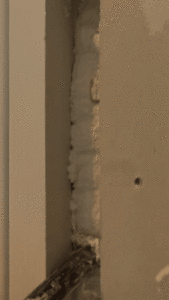
After a window or door is set, the gaps around the unit need to be insulated. One common method is using low-expansion foam around the frame.

The “low expansion” part matters.

Too little insulation can leave gaps where air and moisture can sneak through. Too much pressure from the wrong type of foam can push against the frame and cause problems over time. A window frame or door frame can start to bow, warp, stick, or become harder to operate.

That is not exactly the dream when you just paid for a new window.

A good installation is not about blasting foam everywhere and hoping for the best. It is about using the right material, in the right amount, in the right place.

2. Water management is not optional

This is one of the biggest details homeowners should understand.

Windows and doors live in the exterior wall of your home. That means they have to deal with rain, wind, humidity, and seasonal changes. Even a very good window or door still needs the wall around it to manage water properly.

That is where flashing details matter.

Most homes have a house wrap on the wall. During a proper installation, the house wrap is usually cut and integrated into the rough opening. Then, flashing tape is used to seal the opening in the right order.

The order matters too.

Typically, the bottom gets addressed first, then the sides, then the top. That way, water is directed down and away instead of being trapped where it can rot the wall.

This is where shortcuts get expensive.

Some installations look perfectly fine when the job is finished. The trim looks good. The window opens. The caulk line looks clean. Everybody packs up and goes home.

But if the flashing and water management details are wrong behind the scenes, water can eventually find its way into the frame, wall, sheathing, or insulation. Over time, that can lead to rot, mold issues, soft wood, and repairs much bigger than anyone wanted.

“Do your best and caulk the rest” is not a long-term plan. It is a bumper sticker for future problems.

Caulk has a job, but it should not be the only thing standing between your home and water damage. A proper installation should be built so water still has a path out, even if exterior sealants eventually crack or wear down.

Water management

A clean caulk line is not the whole plan.

Windows and doors need more than a good-looking finish. The details behind the trim help decide whether water moves away from the opening or quietly causes problems later.

```
Missed detail What can happen What a better installation should consider
1 Flashing is skipped or installed in the wrong order Water can sneak behind the exterior finish and sit where it should not. Over time, that moisture can lead to hidden damage around the window or door opening. The bottom, sides, and top of the opening should be handled in a way that helps water move out and away from the wall.
2 Caulk is treated like the whole plan Caulk can crack, shrink, or wear down over time. If it is the only line of defense, the wall may have no backup protection. Sealants matter, but they should work with flashing, house wrap, and proper water management details, not replace them.
3 Soft or rotted material gets covered up Hidden damage can keep spreading after the new unit is installed. The finished trim might look nice, but the problem behind it is still there being dramatic. The opening should be inspected before the new window or door is installed so damaged material is not dressed up and left to become future drama.
Joyland takeaway: Water should be managed before it becomes a problem, not after the wall starts acting like a sponge with commitment issues.
```

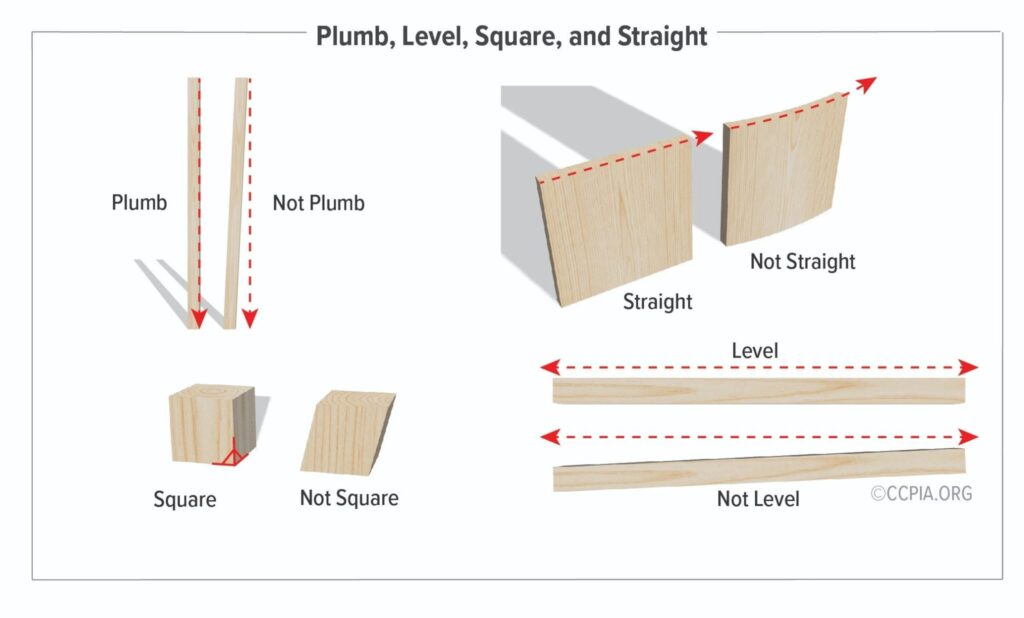
3. The window or door needs to be plumb, level, and square

This is one of those construction phrases that gets thrown around a lot, so let’s make it plain.

  • Plumb means vertical.
  • Level means horizontal.
  • Square means the corners are aligned correctly.

Basically, the window or door needs to sit correctly in the opening. Not close enough. Not “we can hide it with trim.” Correctly.
internachi plumb level square and straight scaled (1)

When a door is out of plumb, it may swing open or closed on its own instead of staying where you leave it. When a window is not square, it may be harder to open, harder to lock, or more likely to have gaps.

Sometimes one corner of a window or door may sit “proud” of the wall. That means one part sticks out farther than another. It might not sound like a big deal, but it can create problems with trim, operation, and the finished look.

A window or door should not just look good from across the room. It should be set properly so it works correctly every day.

That is especially important because small installation issues can become more noticeable over time. Materials move. Homes settle. Weather changes. If the unit starts out slightly wrong, those little issues can become daily annoyances later.

4. Shims and fasteners matter more than most people realize

Shims are small pieces used to help position and support a window or door in the opening.

They may not look exciting, but they are important.

Proper shim placement helps keep the frame supported where it needs support, especially near locking points, hinges, and fastener locations. If shims are placed poorly, missing in key spots, or installed in a way that twists the frame, the window or door may not operate correctly.A diagram showing how to properly use a shim
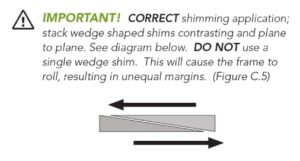
There is also a right and wrong way to use shims.

You do not just jam one shim into the gap and call it a day. In many cases, shims should be paired from opposite directions so they create a flat, even surface. If only one shim is forced into place, it can twist or distort the frame.

Fasteners matter too.

Using the wrong fasteners, placing them incorrectly, or tightening them too much can pull the frame out of shape. That can create sticking, warping, alignment problems, or trouble with locks and hardware.

This is the kind of detail most homeowners will never notice during the quote process. But your installer absolutely should.

A good contractor is not just thinking, “How do we get this window in the hole?”

They are thinking, “How do we install this so it stays supported, sealed, aligned, and easy to operate?”

Big difference.
5. Measuring and ordering have to be done carefully

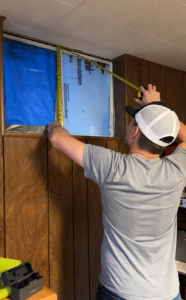
A Joyland Windows and Doors Employee meauring a window that needs to be replaced Measuring for replacement windows and doors sounds simple.

Width. Height. Done.

Except not really.

A good measurement is not just about the size of the opening. It is about understanding the whole situation around that opening.

  • What is happening with the exterior trim?
  • What kind of siding is around it?
  • What is the wall condition?
  • What does the interior trim look like?
  • Is the opening square?
  • Are there signs of rot or movement?
  • Will the replacement unit actually work with the home?

The tricky part is that the person measuring usually cannot tear the whole window or door apart during the estimate. That means they need enough experience to know what to look for and what might be hiding behind the visible materials.

If a window or door is measured incorrectly, one of two frustrating things can happen.

The project gets delayed because the product has to be reordered, or the installer is forced to make something fit that was never quite right for the opening.

Neither one is ideal.

Proper measuring helps protect the schedule, the finished look, the operation of the product, and the long term performance of the installation.

Before you sign

5 window installation details worth asking about

You do not need to become a window expert. You just need to know which details can make the difference between a window that performs well and one that gives you headaches later.

```
Installation detail Why it matters What to ask your contractor
1 Rough opening The opening needs to be checked, sealed, and prepared before the new window or door goes in. If this step is rushed, you can end up with drafts, gaps, moisture issues, or poor performance. How will you check and prepare the opening before installation?
2 Water management Flashing and sealing details help move water away from the wall. If water gets trapped, it can lead to rot, soft framing, damaged sheathing, or other problems hiding behind the trim. What flashing details will you use to help keep water moving away from the opening?
3 Plumb, level, and square The unit needs to sit correctly in the opening. If it is not plumb, level, and square, it may be harder to open, close, lock, or trim properly. How do you make sure the window or door is installed straight and operates smoothly?
4 Shims and fasteners Proper shim and fastener placement helps support the frame without twisting it, pulling it too tight, or leaving weak spots around locks, hinges, and operating points. Where will the window or door be supported, and how do you prevent the frame from twisting or warping?
5 Measuring Good measuring goes beyond width and height. Trim, siding, wall conditions, and the actual shape of the opening all affect how well the product fits and performs. What do you look at besides width and height when measuring for the project?
Joyland takeaway: A good contractor should be able to explain these details clearly. If the answer is basically “we just make it fit,” that is not a plan. That is a future blog post waiting to happen.
```

Need help with replacement windows or doors?

Joyland Windows & Doors helps homeowners understand their options without pressure, guesswork, or contractor nonsense.

If you are thinking about replacing a window or door, we can walk you through what to expect, what to look for, and how to choose the right solution for your home.

Call Joyland Windows & Doors at 717-733-7534 or click the button below to get in contact with us.